My Role
Digital Product Manager: Owned UX strategy, stakeholder alignment, component evaluation, and QA for publish-ready pages.
Context & Problem
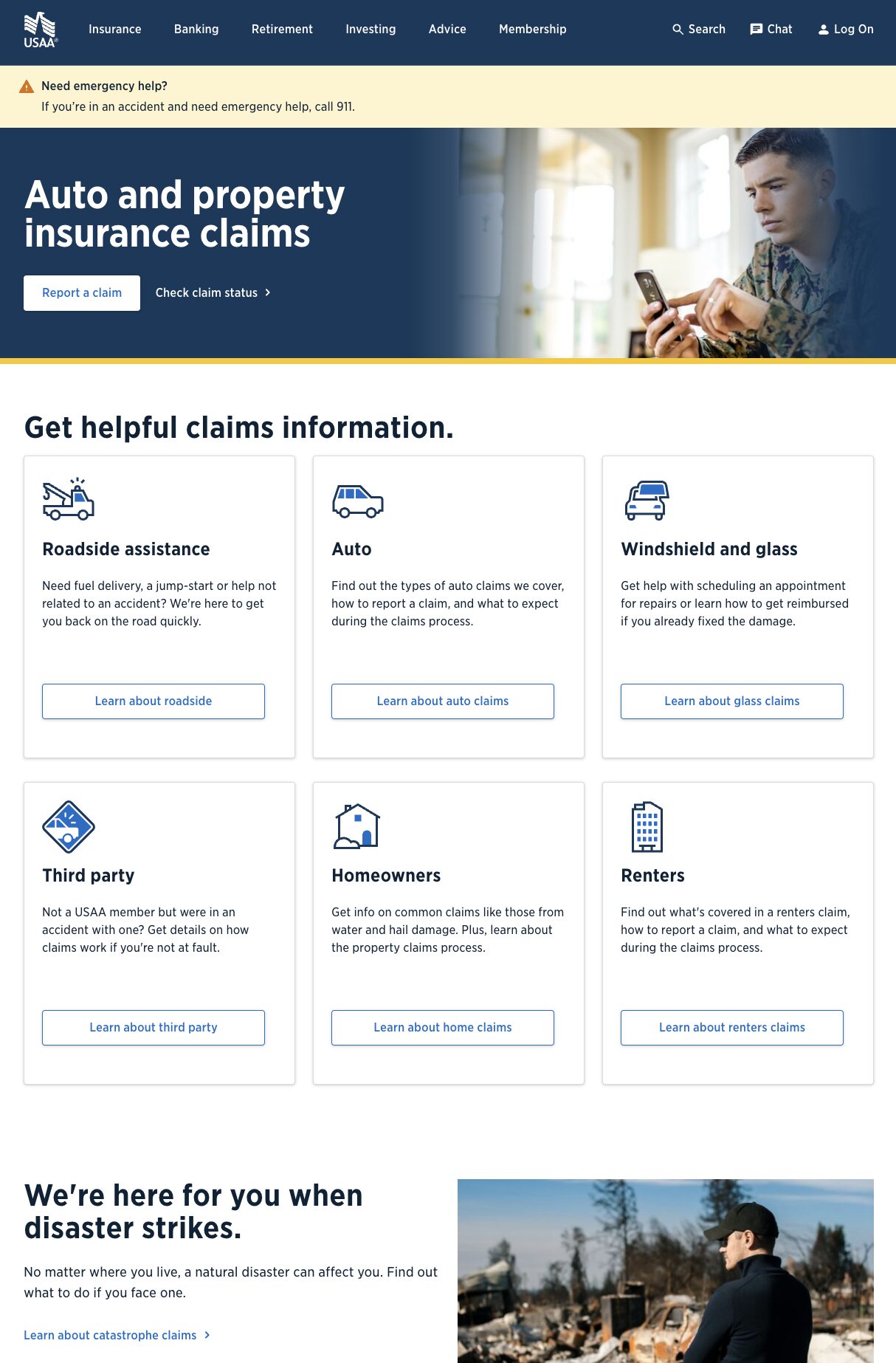
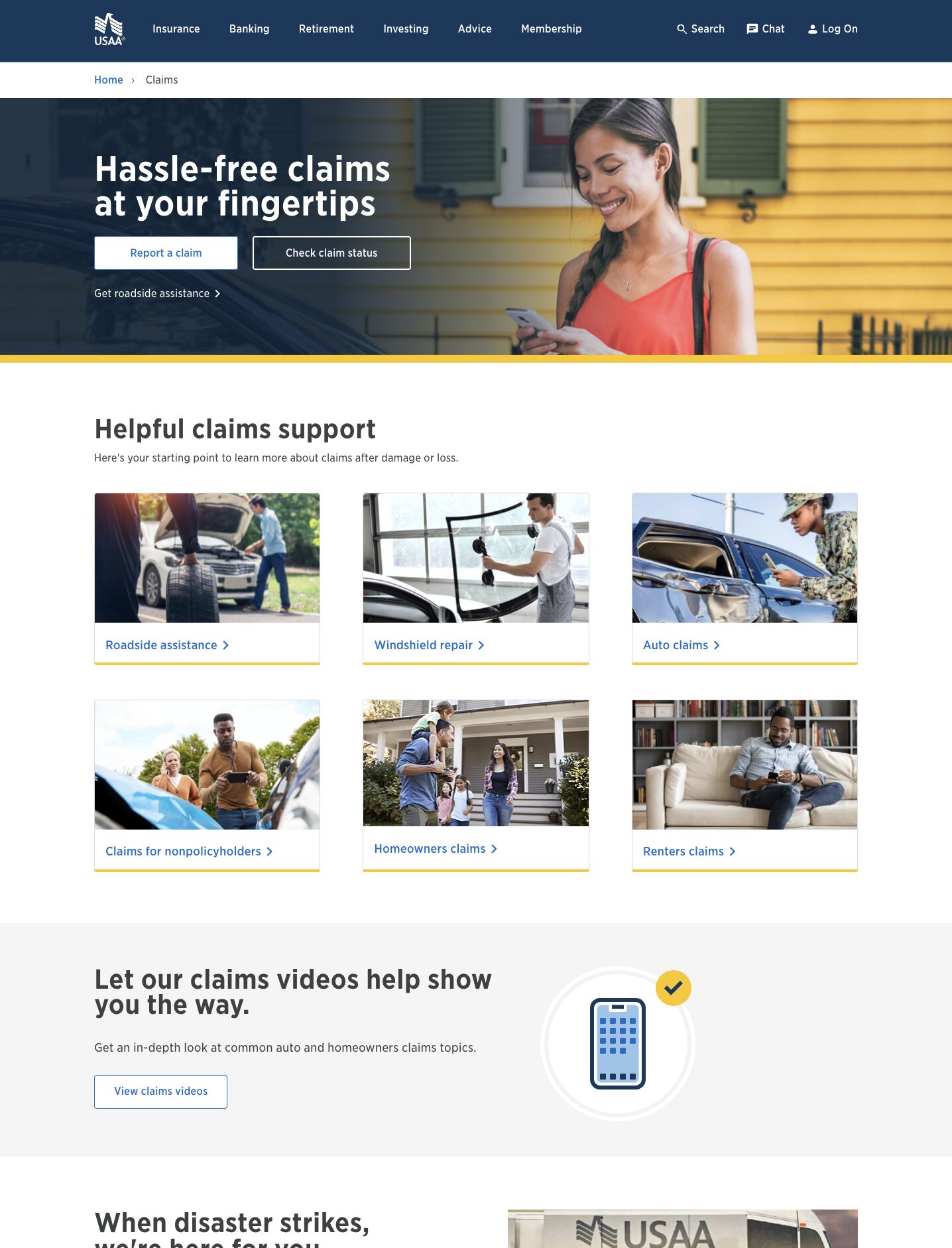
An aging web platform was being retired; renewing it would cost millions. The claims storefront had to migrate to a new web publishing platform that required a new set of UI components and page layouts. The business KPI requirement was clear: migration must not degrade traffic, click-through rate, or interactions with digital servicing tools (e.g., filing a claim, policy lookup).
Constraints
- 1:1 content transition requirement (content should remain functionally equivalent).
- The new component library altered the look and feel, but lacked some required functionality.
- High-traffic pages could not suffer KPI degradation during or after migration.
- Program complexity: multiple partner teams, changing leadership priorities.
Approach
Although the migration required a straightforward 1:1 transition, we used it as an opportunity to enhance readability and actionability based on member feedback. Key activities included:
- Audit of existing storefront pages to prioritize by traffic and servicing importance.
- Component inventory and gap analysis against required storefront functions.
- Iterative page conversion using prototypes and staging reviews.
- Targeted A/B optimization testing on the highest-traffic pages to validate parity or improvement vs. legacy pages.
Execution Highlights
- Converted pages in prioritized waves, starting with the top 85% by traffic and servicing interactions.
- Used lightweight prototypes and content-first layouts to preserve functional parity.
- Ran controlled optimization tests (A/B) on the highest-traffic pages to measure real user behavior before full rollout.
- Cross-functional weekly syncs during publish windows to catch regressions in serving functions (filing a claim, policy lookup).
Challenges & Solutions
- Slow conversion progress
- Challenge: After several months, pages weren’t being converted to the new layouts.
- Solution: Instituted a recurring stakeholder review routine (weekly cadence) with product, design, content, dev, and publishing leads. We reviewed batches of pages, captured actionable feedback, and approved pages for publication—creating a predictable pipeline and visible momentum.
- Component limitations
- Challenge: The supplied UI components lacked the necessary functions for claims workflows.
- Solution: Performed a component evaluation to identify reusable pieces, then partnered with component owners and dev teams to specify and deliver missing functions. Built short-term workarounds where needed and replaced them with component updates as they landed.
- Leadership change and misalignment
- Challenge: New leadership introduced expectations, whcih uncovered a blind spot about page presentation.
- Solution: Rapidly re-evaluated a prioritized set of pages to align with updated leadership expectations and accelerated approvals to keep the migration timeline on track.
Results
- Optimization testing showed the new pages performed 20% better than the legacy pages on key metrics (traffic-normalized engagement and interactions with digital servicing functions).
- Member satisfaction with the online claims filing experience increased (as indicated by qualitative feedback and satisfaction surveys following the launch).
- Migration completed without KPI degradation; improved maintainability and a path to retire the old stack.
Key metrics
- +20% performance improvement vs. legacy pages (optimization-confirmed).
- No measurable drop in traffic and increased servicing interactions during migration waves.
- Faster publishing pipeline after stakeholder routine established (reduction in review-to-publish time; operational metric tracked internally).
Lessons Learned
- Operational cadence with stakeholders unlocks stalled work and creates accountability.
- Controlled optimization testing is essential when a migration alters the look and feel — it de-risks user-facing changes and validates decisions with data.